


Does Matcha Break Intermittent Fasting? It Depends
If matcha is part of your morning ritual, you may wonder whether you can continue enjoying it during an intermittent fasting window.
The short answer is plain matcha prepared with water is unlikely to meaningfully disrupt most calorie-focused intermittent fasting routines.
However, matcha is not entirely calorie-free, and the answer depends on the type of fasting you're practicing.
Here's what matters.
Does plain matcha break a fast?
Matcha is made from finely ground green tea leaves, whisked directly into water.
Unlike traditional brewed tea, where the leaves are removed after steeping, matcha allows you to consume the powdered leaf itself.
This means matcha naturally contains small amounts of calories and nutrients.
A typical serving of 1–2 g provides only a few calories, making it unlikely to significantly affect the calorie balance of a standard intermittent fasting routine.
For someone practicing time-restricted eating, such as a 16:8 schedule, plain matcha with water is generally a reasonable choice.
However, if your fasting protocol requires absolutely no caloric intake, matcha is not technically equivalent to water.
The distinction is simple: your fasting rules should reflect your actual goal.
What about matcha lattes?
This is where the answer changes.
While plain matcha contains very few calories, the ingredients added to it can turn it into a more substantial beverage.
| Preparation | During a calorie-focused fast? |
|---|---|
| Matcha + water | Generally compatible |
| Matcha + sugar or honey | Breaks the fast |
| Matcha + dairy milk | Breaks the fast |
| Matcha + oat or almond milk | Breaks a strict fast |
| Matcha + collagen or protein | Breaks the fast |
| Matcha + MCT oil | Breaks the fast |
If you enjoy your matcha with milk, there's no reason to give it up.
Simply enjoy your latte during your eating window.
A ritual doesn't become less valuable because it contains calories.
Can you drink matcha on an empty stomach?
Many people enjoy matcha before breakfast, but individual tolerance matters.
Matcha naturally contains caffeine and L-theanine, an amino acid associated with relaxed attention.
Together, these compounds may support alertness and concentration, although the experience varies from person to person.
For some, matcha on an empty stomach feels comfortable and provides a pleasant start to the morning.
Others may experience nausea, stomach discomfort or increased nervousness.
If you're sensitive to caffeine, consider a smaller serving or enjoy your matcha alongside your first meal.
You can learn more about this combination in our guide to L-theanine and calm focus.
Does matcha affect the benefits of fasting?
It depends on what you're hoping to achieve.
Weight management
If intermittent fasting helps you maintain a consistent eating schedule or manage overall calorie intake, the few calories in plain matcha are unlikely to make a meaningful difference.
Long-term results still depend on your overall nutrition, activity, sleep and energy balance.
Blood glucose management
Plain matcha contains very little carbohydrate, but individual responses to caffeine can vary.
If you're managing diabetes or taking glucose-lowering medication, fasting should be discussed with a healthcare professional.
Autophagy and cellular health
Autophagy is a natural cellular process that has attracted considerable interest in fasting research.
However, there is no established human evidence defining exactly how a small serving of matcha affects fasting-related autophagy.
If you're following a strict water-only protocol, matcha would fall outside those rules.
For everyday intermittent fasting, that level of restriction may not be necessary.
How to prepare matcha during a fasting window
The simplest preparation is also one of the most traditional.
You'll need:
- 1–2 g of quality ceremonial matcha
- 60–80 ml of water
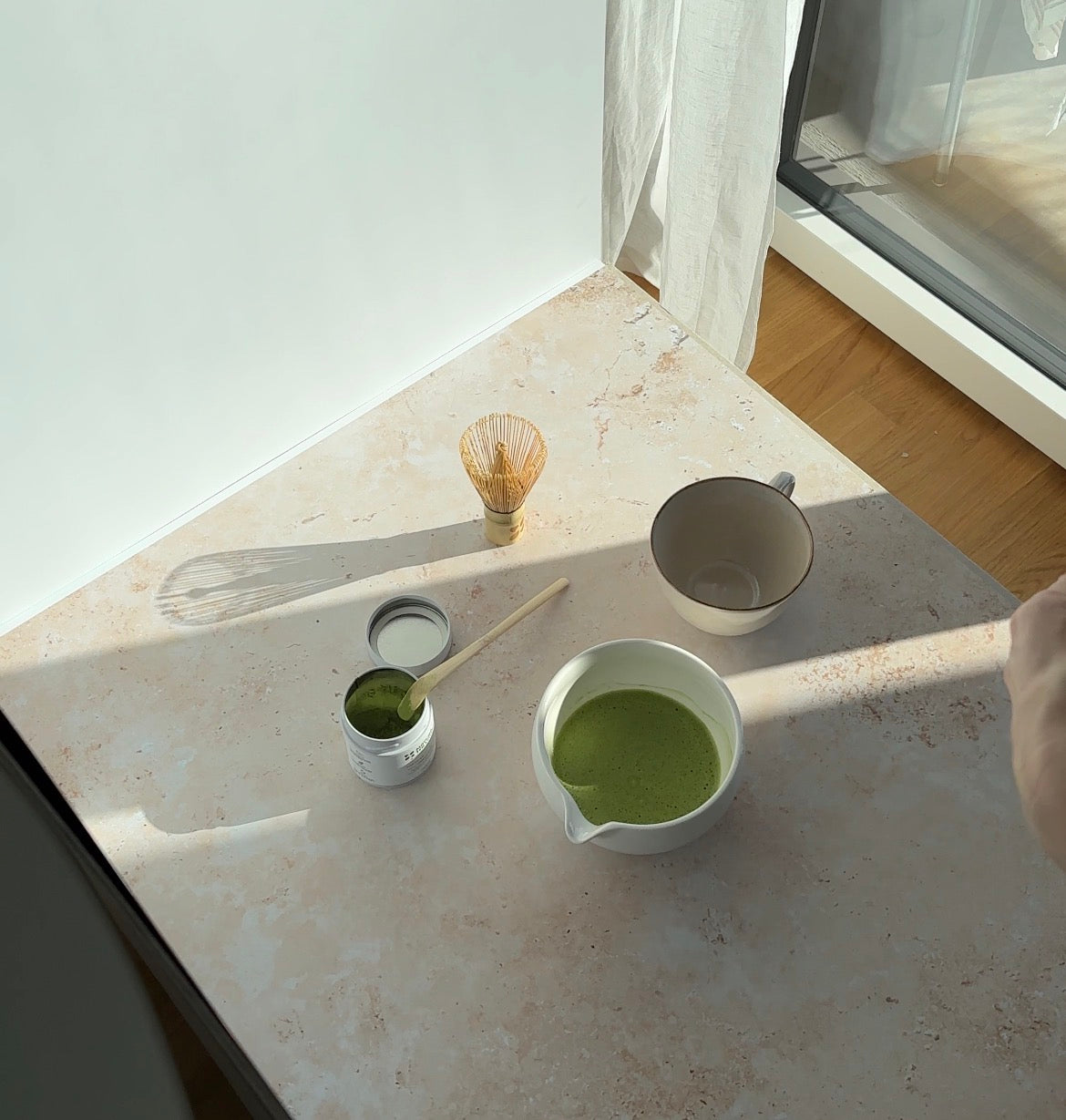
- A bamboo whisk or suitable frother
Enjoy it without milk or sweeteners during your fasting window.
A well-balanced ceremonial matcha, with natural sweetness, smooth texture and gentle umami, makes this preparation especially enjoyable.
For more guidance, explore how to whisk matcha properly.
The ritual doesn't need to change
Intermittent fasting is a personal approach to meal timing, not a universal requirement for wellness.
If it works for your lifestyle, matcha can often remain part of your morning routine.
Plain matcha with water offers a simple way to preserve the ritual during a calorie-focused fasting window.
And when your eating window begins, a creamy matcha latte can be enjoyed just as intentionally.
At Matcha Tea Lovers, we believe wellness should feel considered, not complicated.
The purpose of a ritual is to support your day, not create another set of rules to worry about.


Leave a comment
This site is protected by hCaptcha and the hCaptcha Privacy Policy and Terms of Service apply.