

How to Store Ceremonial Matcha for Freshness
A bright green bowl of matcha begins to lose its character long before it looks obviously old. Knowing how to store ceremonial matcha protects the qualities you chose it for: a vivid color, fresh grassy aroma, gentle sweetness, and a smooth, layered finish. The goal is simple: limit its exposure to air, light, heat, moisture, and strong odors.
Matcha is more vulnerable than whole-leaf tea because it has been finely stone-ground. Its greater surface area means it reacts more quickly to its surroundings. A thoughtful storage routine does not need to be complicated, but it does make a meaningful difference in each bowl.
Why ceremonial matcha needs careful storage
Matcha contains naturally occurring pigments, aromatic compounds, fats, and antioxidants that gradually change after grinding. Oxygen dulls its aroma and flavor. Light can degrade chlorophyll, the pigment responsible for its lively green color. Heat speeds these processes, while humidity can cause clumping and introduce unwanted moisture into the powder.
This is why a beautiful clear glass jar on an open counter is not an ideal home for matcha, even if it suits the rest of your kitchen. The powder may still be safe to drink, but its best qualities can fade quickly.
Ceremonial matcha is generally intended to be whisked with water and enjoyed on its own, where freshness is particularly noticeable. In a latte, milk and sweetener can soften the signs of age. In usucha, or thin tea, there is nowhere for a muted aroma or excessive bitterness to hide.
How to store ceremonial matcha before opening
An unopened tin or pouch should stay in a cool, dark, dry place away from the stove, dishwasher, sunny shelf, and pantry items with strong fragrances. A closed cabinet that remains relatively stable in temperature is usually a sound choice for a tin you expect to open soon.
For matcha you will not use for several weeks or months, refrigeration can help preserve freshness. Keep the unopened package sealed, ideally inside an additional airtight bag or container, before placing it in the refrigerator. This adds protection from moisture and from refrigerator odors.
Freezing is best reserved for unopened matcha you are intentionally saving for a longer period. It is not necessary for a tin you plan to enjoy in the near future, and it requires care. When you are ready to use refrigerated or frozen matcha, let the unopened container come fully to room temperature before breaking the seal. Opening it while it is still cold can invite condensation, and moisture is far more damaging to the powder than a brief period at room temperature.
As a practical rule, buy matcha in an amount that fits your routine. A smaller tin that you finish while it is fresh will usually deliver a better experience than a large container stored indefinitely for the sake of value.
The best way to store opened ceremonial matcha
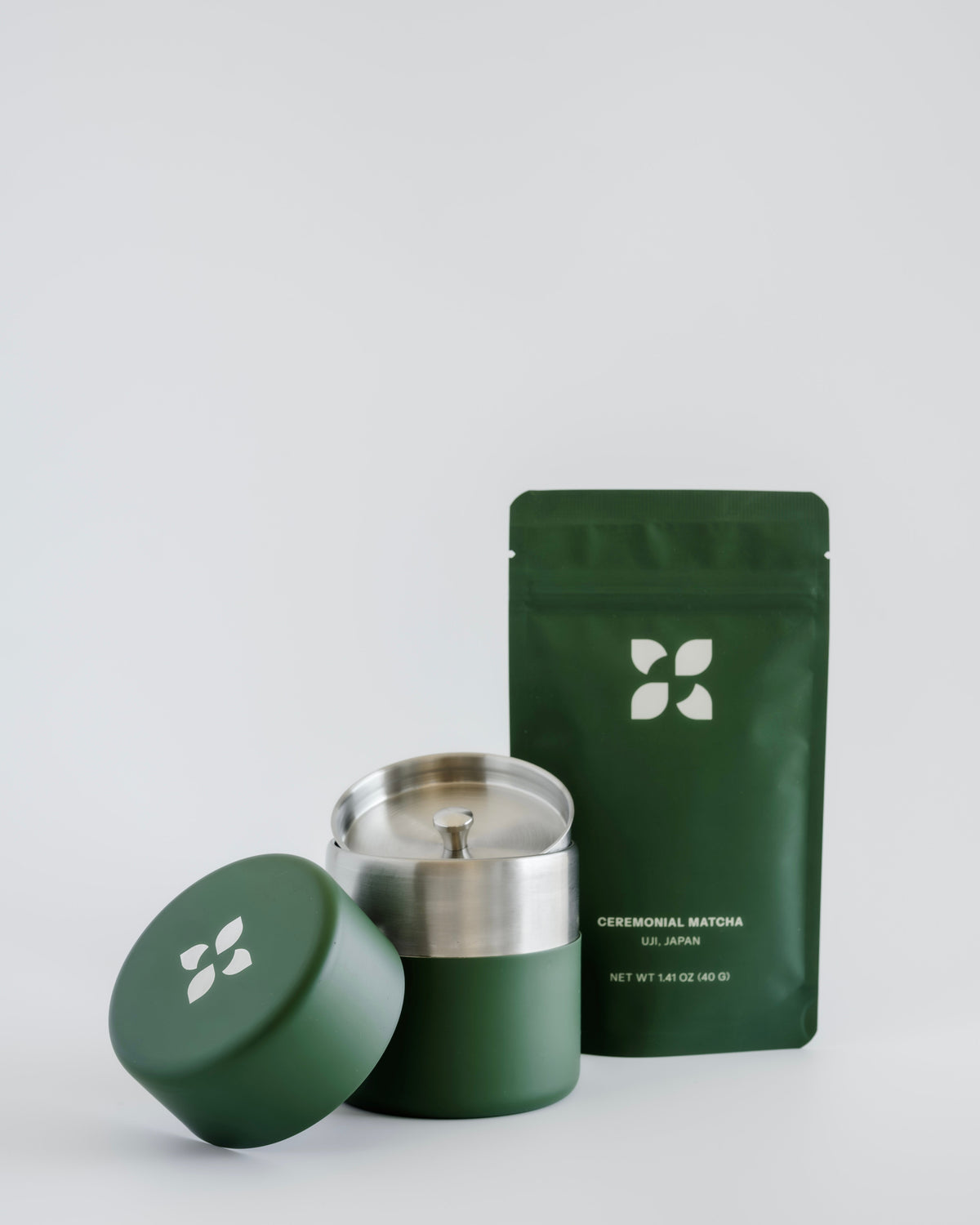
Once opened, matcha benefits from a consistent routine. Keep it in its original opaque tin whenever possible, with the inner lid and outer lid firmly closed after each use. Well-designed matcha tins are made to shield powder from light, and transferring it repeatedly creates more opportunities for air and moisture exposure.
Store the closed tin in a cool, dark cabinet if you use it often, such as several times a week. This is often the simplest option for a daily ritual. Take out what you need with a clean, completely dry bamboo scoop or teaspoon, close the tin promptly, and return it to its place.
Refrigeration is also an option for opened matcha, particularly in a warm home or during summer. The trade-off is condensation. If you refrigerate an opened tin, keep it tightly closed inside a sealed bag or container. Each time you take it out, allow it to return to room temperature before opening it. This is less convenient, but it can be worthwhile if the matcha will be used gradually or your kitchen runs warm.
Avoid moving the same tin back and forth between the refrigerator and pantry. Temperature swings increase the chance of moisture forming around the container. Choose one storage approach and stay with it.
Choose the right container and location
The original container is usually the best answer. If your matcha arrived in a resealable pouch, consider placing that pouch inside an opaque, airtight tin rather than decanting the powder directly into a jar. Keep the pouch closed as tightly as possible between uses.
A suitable container should be opaque, clean, dry, and able to close securely. Clear glass is not ideal unless it is kept inside a dark cabinet at all times. Decorative canisters can work, but only if they are genuinely airtight and completely free from the scents of coffee, spices, tea, or cleaning products.
The location matters as much as the container. Do not store matcha above the range, next to an espresso machine, or near a window. Even a cabinet near a dishwasher can become warm and humid over time. A lower interior cabinet away from heat sources is often better than the most convenient spot on the counter.
Habits that keep matcha fresh longer
Small handling details preserve quality. Never dip a wet spoon into the tin, and do not hold the open container over a steaming kettle or saucepan. Water vapor can settle into the powder without being immediately visible.
It also helps to avoid leaving the tin open while you prepare the rest of your drink. Measure the matcha first, close the lid, then sift and whisk your portion in a bowl. Sifting improves a smooth texture, but it should be done only with the amount you intend to use, not with the entire tin.
If you prepare matcha at work or travel with it, carry only a few servings in a small opaque, airtight container. This protects the main tin from repeated opening and reduces the chance that it spends hours in a warm bag or car.
How long does opened matcha stay at its best?
There is no single expiration point because freshness depends on sourcing, packaging, temperature, and how often the tin is opened. Still, opened ceremonial matcha is generally at its most expressive when used within about two to four weeks. A carefully stored tin may remain pleasant beyond that window, but its most delicate sweetness and aroma will gradually recede.
Unopened matcha typically holds its quality longer, especially when kept cool and away from light. Follow the producer's best-by date, while remembering that a date is not a guarantee of peak flavor after months of warm storage.
Color can offer one clue, but it is not the only one. Fresh matcha is usually vibrant green, although shade-grown cultivars and harvests naturally vary. More telling signs of decline include a flat or dusty aroma, a yellow-green or brown cast, pronounced bitterness, and a dry, stale finish. Clumping can indicate moisture exposure, though a few soft clumps are also normal in finely milled tea and may sift out easily.
A simple storage routine for better bowls
For most households, the most effective approach is uncomplicated: choose a tin size you can finish within a month, keep it in its original opaque container, store it in a cool dark cabinet, and close it immediately after measuring. If your climate or kitchen is consistently warm, refrigerated storage can offer additional protection, provided you prevent condensation by letting the sealed tin warm fully before opening.
Matcha rewards regular use rather than stockpiling. Treat the tin with the same care you bring to whisking a bowl: keep it protected, use it while it is lively, and let each serving reflect the work that began long before the powder reached your kitchen.


Leave a comment
This site is protected by hCaptcha and the hCaptcha Privacy Policy and Terms of Service apply.